• Free Daily Scans
  • 100% In-Browser WebGL
  • No Server Uploads
  • 0-100% Score

AI Face Comparison & Face Similarity Checker Online

Compare two face photos or run batch comparisons instantly using privacy-first artificial intelligence in your browser. Verify whether two pictures show the same person, discover family facial resemblances, or test look-alike likeness with clear percentage scores and trait breakdowns.

Face Comparison Checker

Upload two photos and get a resemblance score. Fast, private, and runs entirely in your browser.

Reference photo preview

    This is visual resemblance from facial features in the two photos, not identity verification or a genetic test.

    Recent comparisons

    Last 5 checks
    Recent comparisons – last 5 checks
    LabelSimilarityTime

    Facial detection, crops, and landmarks remain on your device. Only minimal derived comparison measurements are sent to generate the explanation. Visual resemblance only — not identity verification or a genetic test.

    How FacePair Compares Two Faces in Seconds

    When you want to know whether two photos depict the same person or share family traits, FacePair provides instant analysis directly on your device.

    Upload two face photos or a batch of comparison images into the FacePair browser tool

    Upload or Capture Photos

    Select your photos from any device or capture your portrait live. FacePair supports single comparisons as well as high-speed candidate batches.

    1-to-1 Comparison
    Select any two clear frontal portraits, selfies, or historical photos for pairwise analysis.
    1-to-Many Batch Testing
    Select multiple candidate faces in Photo 2 to scan a batch against your reference portrait simultaneously.
    Live Camera Mode
    Use your webcam or phone camera via WebRTC to compare your live selfie in real time.
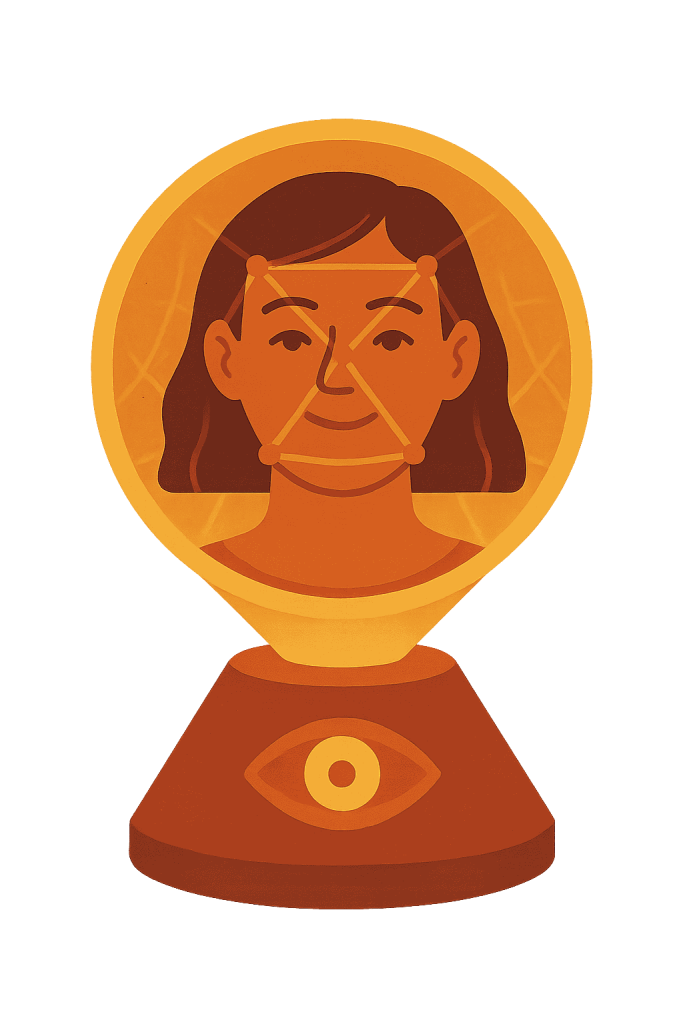
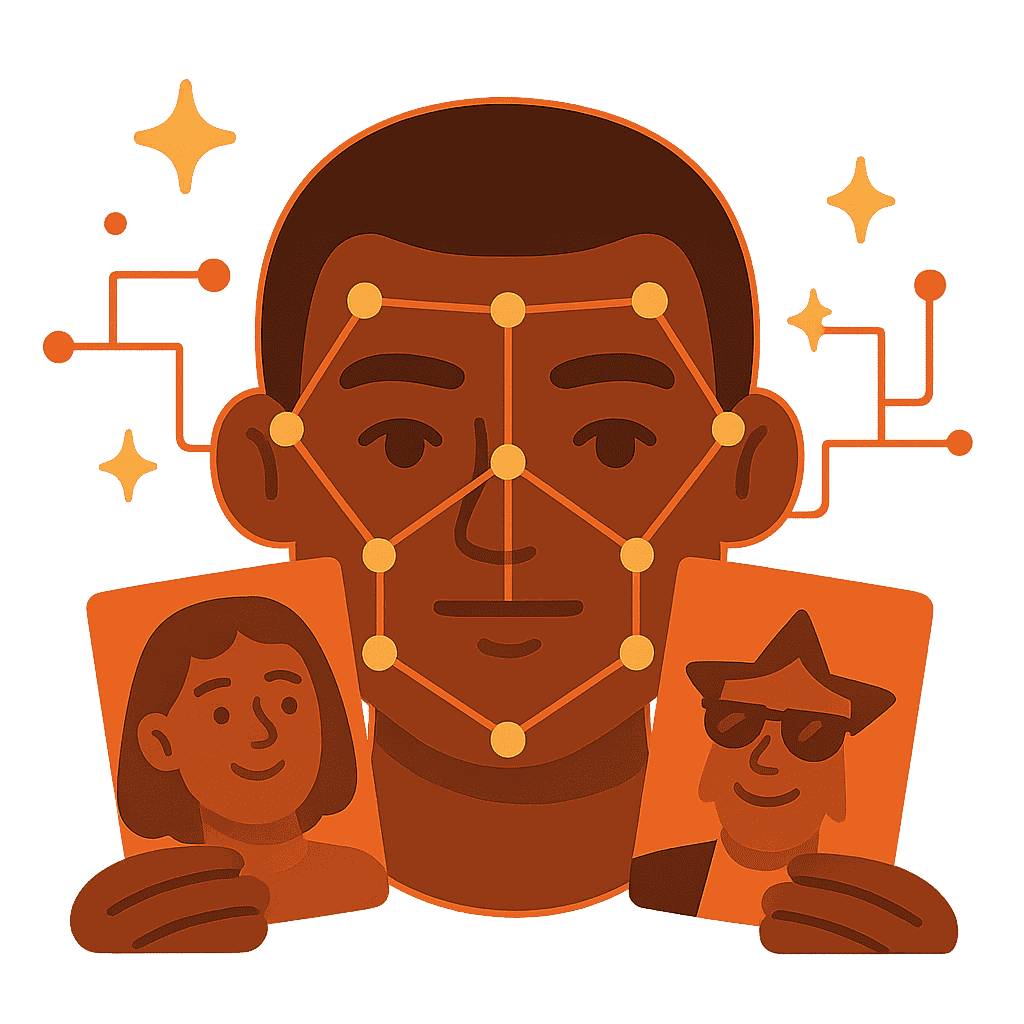
    AI facial landmark mesh analyzing 468 3D points across eyes, nose, jawline, and facial geometry

    In-Browser AI Face Analysis

    Our client-side neural network detects subtle craniofacial landmarks, standardizes head tilt, and extracts high-dimensional identity embeddings.

    468 3D Landmark Mesh
    Maps dense spatial contours across eyes, brows, nose, lips, and jaw structure in three dimensions.
    Canonical 256x256 Alignment
    Applies affine Umeyama transformation normalizing pupil coordinates to eyeY 0.38 and eyeSpan 0.34.
    Dual-Model WebGL Pipeline
    Extracts high-dimensional embeddings using FacePair GeoMatrix 1024-D structural descriptors and FacePair DeepID identity networks.
    FacePair comparison result showing a 0 to 100 percent facial similarity score and trait breakdown

    Instant Similarity Score and Trait Breakdown

    Receive a comprehensive similarity report within seconds, featuring an overall percentage score, calibrated verdict badge, and regional trait scores.

    0-100% Similarity Score
    Calibrated metric quantifying overall craniofacial identity alignment.
    5 Calibrated Verdict Bands
    Categorizes results from Very High Likeness down to Low Resemblance.
    4-Region Trait Breakdown
    Inspects individual zone alignment across Face Shape, Eyes, Nose, and Mouth.

    What Does a Face Similarity Score Mean?

    Face similarity percentages reflect biological and geometric feature distance calculated by deep neural models. Scores between 35% and 54% indicate subtle facial resemblance rather than an identity match. True identity confirmation requires scores of 75% or higher under standard portrait conditions.

    FacePair Calibrated Similarity Score Ranges and Real-World Interpretations
    Similarity Range Verdict Badge Biometric Meaning Typical Real-World Match Scenarios Recommended Next Step
    90% to 100% Very High Likeness These two faces look remarkably similar. Extremely close craniofacial geometry and feature vectors. Clear frontal portraits of the same person or identical twins taken in consistent lighting. Confirmed same-person match for profile or identity checks.
    75% to 89% Strong Likeness These two faces look very similar. Solid feature overlap with minor variations in environment or age. Same person photographed years apart, with different hairstyles, facial hair, or angles. Close doppelgangers. Considered a confident match. Check photo angles if verifying critical profiles.
    55% to 74% Noticeable Likeness These faces share noticeable facial similarities. Substantial overlap in facial structure without identical features. Biological family members (parent and child, siblings), strong celebrity look-alikes, or heavy makeup variations. Explore family resemblance or trait breakdown to see which zones align most closely.
    35% to 54% Subtle Likeness There is some visual facial resemblance. General face shape or single feature alignment with distinct structures elsewhere. Shared face shape or eye spacing among friends, couples, or distant relatives. Not the same person. Review individual facial traits. Upload closer frontal portraits if checking identity.
    0% to 34% Low Resemblance These faces show little visual resemblance. Distinct craniofacial landmarks, eye spans, and jaw proportions. Unrelated individuals with different bone structures and facial proportions. Faces are clearly distinct. Verify that both uploaded photos clearly show a front-facing face.

    Key Factors That Affect Facial Comparison Scores

    Biometric comparison algorithms measure physical pixel geometry. Several external variables can influence your result. Our real-time Photo Quality and Pose Health Coach monitors these conditions before each comparison.

    Head Pose and Camera Angle

    Biometric comparison works best when subjects face the camera directly. While FacePair automatically normalizes slight tilts, head turns beyond 15 degrees compress lateral features. The Photo Health Coach actively flags angled faces.

    Lighting, Exposure and Shadows

    Harsh directional lighting or deep shadows alter perceived facial depth and landmark contours. Diffuse, even lighting ensures the landmark mesh accurately maps cheekbones and eye sockets.

    Age Progression and Facial Hair

    Comparing childhood photos with adult portraits naturally lowers similarity scores due to craniofacial bone growth. Dense beards also obscure the jawline and chin contour.

    Digital Filters and Lens Distortion

    Smartphone wide-angle selfie lenses (24mm to 28mm) cause barrel distortion that enlarges the nose, while telephoto portraits compress facial depth. Beauty filters also smooth critical landmark boundaries.

    What You Can Do with FacePair

    FacePair serves diverse personal, creative, and research workflows with instant in-browser biometric precision.

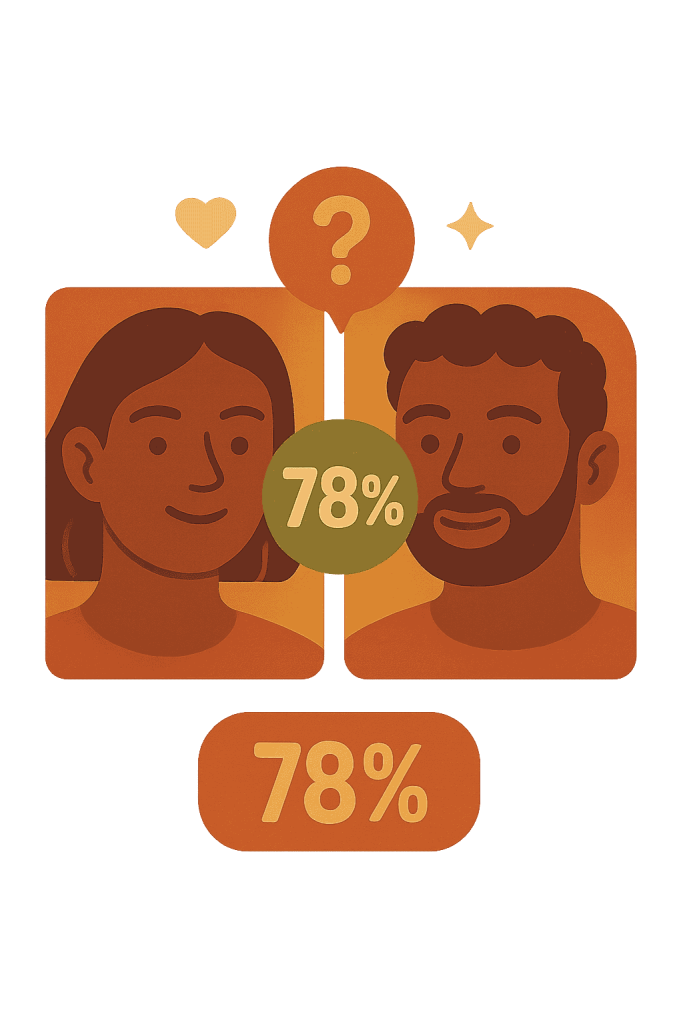
    Side-by-side comparison checking whether two profile photos show the same person

    👤 Verify if Two Photos Show the Same Person

    Verify whether two dating profiles, social media accounts, or professional portraits belong to the same person. Spot recycled or deceptive images quickly and privately.

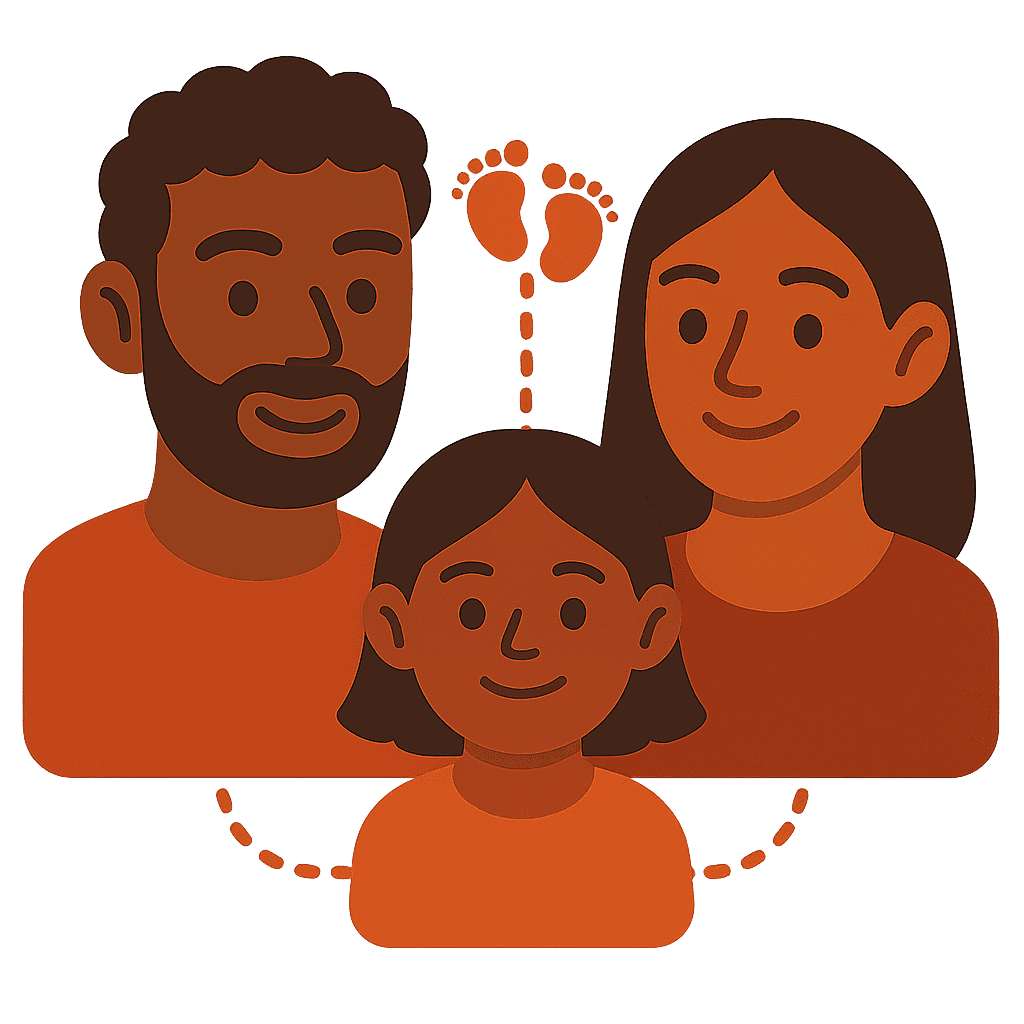
    Parent, child, and sibling photos compared side by side for family facial resemblance

    👪 Discover Family Resemblances

    Discover whether you share your mother's eyes, your father's smile, or your sibling's jawline. Compare multi-generational family photos or explore our dedicated AI Face DNA Test for full family balance analysis.

    User portrait compared against a celebrity photo to measure look-alike facial similarity

    🌟 Find Your Celebrity Look-Alike or Doppelganger

    Upload your portrait alongside any celebrity, athlete, or historical figure to find out your objective resemblance score. Settle look-alike debates with biometric data.

    Before and after portrait comparison testing facial similarity across makeup and cosplay changes

    🎭 Compare Transformations, Aging, Makeup, or Cosplay

    Track facial consistency across weight loss, fitness transformations, aging milestones, or creative cosplay and theatrical makeup.

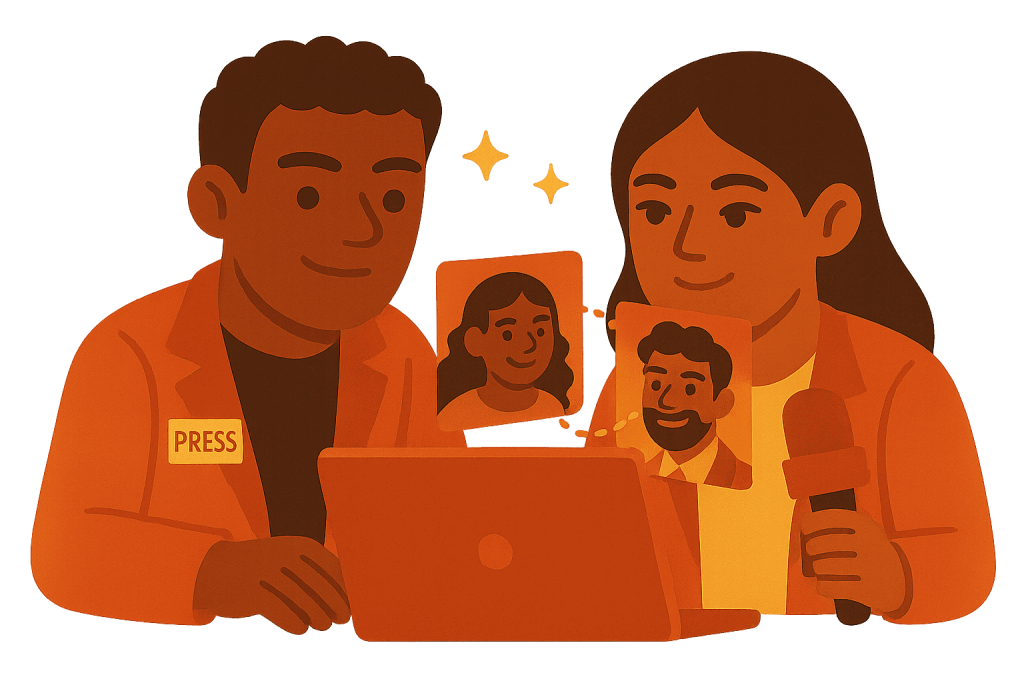
    Researcher comparing two press photos to evaluate structural facial similarity

    🕵 Verify Photos for Journalism, OSINT and Research

    Investigative journalists, OSINT analysts, and researchers can rapidly evaluate viral images, uncompressed press photos, and archival records without uploading sensitive files to cloud servers.

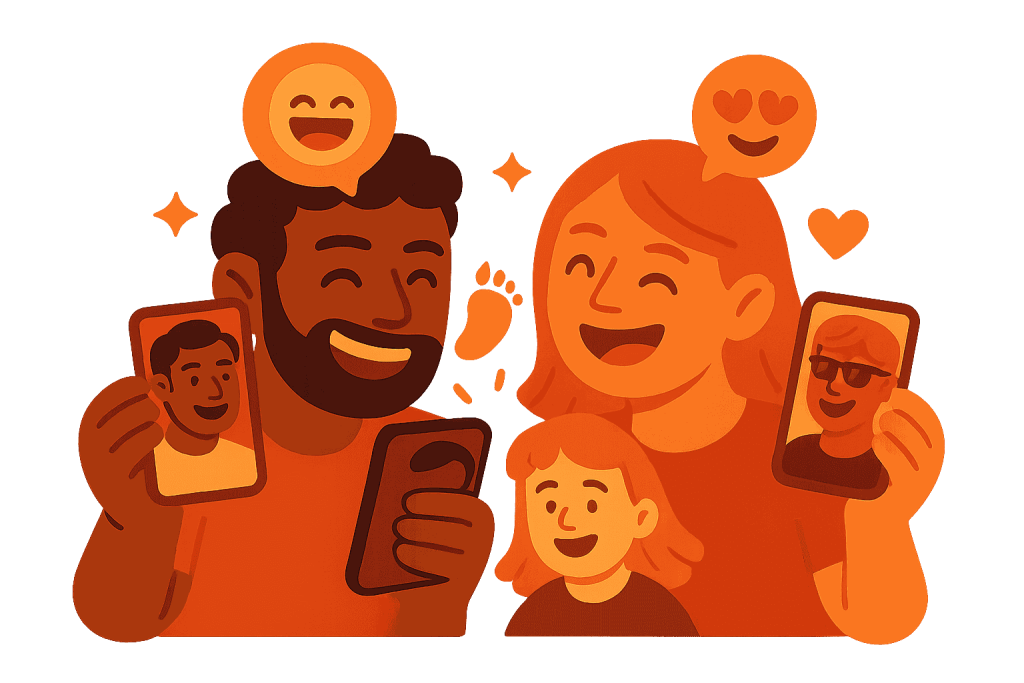
    Couple and friends comparing selfies for a couple face compatibility and look-alike challenge

    ❤ Couple Face Compatibility and Friends Challenge

    Put the popular sibling or dating question to the test. Compare face shapes, smile curves, and eye spacing with your partner or friends in a fun social challenge.

    Why People Choose FacePair for Face Comparison

    FacePair delivers enterprise-grade facial analysis directly inside your web browser, prioritizing data privacy and mathematical precision.

    Biometric facial proportion grid illustrating high-precision in-browser AI face comparison

    Dual-Model WebGL Engine

    Combines FacePair GeoMatrix 1024-D structural descriptors with FacePair DeepID identity embeddings on a 256x256 canonical eye-aligned crop.

    100% In-Browser Privacy

    Zero photos or feature vectors are transmitted to external servers. All neural processing runs locally in browser GPU memory via WebGL.

    1-to-Many Batch Testing

    Upload multiple candidate faces in Photo 2 to evaluate an entire gallery against one reference image in a single pass.

    Real-Time Pose Health Coach

    Built-in diagnostic coach monitors lighting, sharpness, face size, and tilt angle in real time to guarantee optimal comparison confidence.

    4-Region Trait Analysis

    Examines distinct cranial zones including Face Shape & Jawline, Eyes & Eyebrows, Nose, and Mouth & Lips.

    Free Instant Daily Scans

    Accessible globally across desktop and mobile browsers without requiring account creation, subscriptions, or app installations.

    Frequently Asked Questions About Face Comparison

    Find clear answers to common questions about face similarity metrics, privacy architecture, and comparison accuracy.

    How does FacePair compare two faces online?

    FacePair uses hardware-accelerated WebGL in your browser to run dual neural networks: FacePair GeoMatrix and FacePair DeepID. The system locates 468 3D facial landmarks, aligns the eyes to a standardized 256x256 canonical grid, extracts mathematical identity embeddings, and calculates cosine distance to produce a calibrated similarity score from 0% to 100%.

    Can face comparison confirm if two photos show the same person?

    FacePair provides strong probabilistic guidance on whether two photos show the same person based on craniofacial geometry. When both photos are clear and front-facing, scores of 75% or higher indicate strong likeness consistent with the same identity. However, FacePair is an algorithmic likeness tool and does not replace official government identity verification or legal biometric systems.

    What similarity score means two photos are the same person?

    In FacePair's calibrated scoring model, scores between 75% and 89% represent Strong Likeness, typical for the same individual photographed across different years, lighting, or hairstyles. Scores between 90% and 100% represent Very High Likeness, typical of frontal photos under matching lighting or identical twins. Scores between 35% and 54% indicate subtle resemblance, while scores below 35% indicate distinct individuals.

    Are my photos uploaded to a server or stored?

    No. All photo processing, facial landmark detection, and similarity calculations happen 100% locally in your web browser memory using client-side WebGL and WebAssembly. Your images are never sent across the internet, never uploaded to any cloud server, and never stored. All image data is immediately cleared when you close or refresh the browser tab.

    Can I compare multiple photos against one reference face at once?

    Yes. FacePair supports 1-to-many batch comparison. You can select your reference portrait in Photo 1, then upload or select multiple candidate photos simultaneously in Photo 2. FacePair will sequentially scan each face against your reference photo, displaying ranked similarity scores and thumbnails in a single view.

    Why might two photos of the same person receive a score below 75%?

    Several physical and environmental factors can reduce the similarity score of the same individual. Wide-angle smartphone selfie lenses cause optical barrel distortion, strong directional side shadows distort landmark contours, and extreme head tilt beyond 15 degrees compresses facial features. Significant aging gaps, dramatic weight changes, or dense facial hair can also shift embedding vectors. Use the built-in Photo Health Coach to verify optimal lighting, sharpness, and front-facing angles.

    Can FacePair tell if family members or siblings look alike?

    Yes. First-degree biological relatives (parents, children, and siblings) share approximately 50% of their segregating genetic material, leading to shared skeletal facial structure. In FacePair, biological relatives typically receive scores between 55% and 74% (Noticeable Likeness). You can also view the 4-region trait breakdown to see whether you share more similarities in the eyes, nose, mouth, or jawline. For dedicated multi-person family balance analysis, visit our AI Face DNA Test.

    Is FacePair free to use?

    Yes. FacePair provides free instant face comparisons with generous daily scan allowances. You can compare photos directly in your web browser on desktop, tablet, or smartphone without registering an account, providing an email, or entering credit card details.